I'm a big girl now ...

... and finally I've managed to upload videos to Youtube. Talk about tech-disability here! :P

Two flight flicks from a helicopter in Grand Canyon (Colorado) on october, 2007.


Tomb Raider!

Cambodia rulz!!

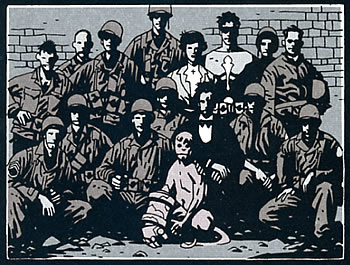
Hellboy: The secret history of the world

Hi, people,
With Hellboy's new film almost ready on the oven, I've decided to give a different format to my collection of references to every BPRD case in the books:


Ver mapa más grande

Not finished, but I'll keep working ;)

Todos los días es Halloween: Mike Mignola y el género de terror

This text is translated into english at the end of the post for non spanish speakers' convenience. (Esto lo escribi hace algun tiempo para un fanzine y lo he encontrado en mi viejo disco duro. Espero que os guste)


Desde hace ya bastante tiempo ha destacado con luz propia en el mundo del comic el estilo de Mike Mignola, maestro de las sombras y el claro-oscuro. Mignola ha evolucionado con los años hacia un trazo simple y efectista y su estilo se ha comentado ampliamente [12][13], por lo que este artículo va a tratar sobre un aspecto distinto del autor: su trabajo como guionista y las influencias del terror clásico en sus historias.

Después de trabajar varios años para las compañías más importantes del panorama americano, a Mignola se le ofreció la oportunidad de crear su propio personaje bajo unas condiciones mucho más flexibles bajo la línea Legend, de Dark Horse, en la que ya se encontraban autores de renombre como Frank Miller, Art Adams o John Byrne. Éste consideró que era el momento de dedicarse a dibujar los temas que le
gustaban y así nació Hellboy.


Después de una serie de apariciones sueltas con la temática común de 'Hellboy machaca [introduzca aquí su monstruo favorito]' y básicamente publicadas en sucesivos Dark Horse Presents, la primera miniserie de Hellboy [1] fue guionizada por John Byrne sobre una idea del propio Mignola, pero según las palabras de éste, al final ejerció mucho más control sobre el producto final del que se suponía en un principio y, a partir de ahí, tomó las riendas de sus historias. 'Semilla de Destrucción' introduce el origen del personaje y las bases que guiarán su desarrollo.


La referencia más obvia en las páginas de Hellboy al terror clásico es la existencia de un infierno, de acuerdo a la concepción cristiana de éste, habitado por demonios. De acuerdo a las costumbres del Sabbat [14], el héroe es el fruto de la impía unión de una bruja con uno de éstos [10], lo que hace de Hellboy el típico personaje empozoñado por una mitad oscura con la que se encuentra en contínua pugna. La idea es bastante común en la narrativa actual, pero puede remontarse hasta la literatura inglesa medieval, cuando Beowülf, hijo del diablo y de una princesa engañada, consagra su vida a combatir los designios de su progenitor. Este tipo de héroes suelen heredar determinados poderes, pero también una sed de sangre que a duras penas logran contener, si es que no son decididamente malignos, como en el caso de La Profecía. En este aspecto, Hellboy no está tan sujeto a este tipo de instintos como a su inexorable destino como destructor de naciones [1][7][9], para el que fué invocado por Rasputín, el brujo.


Aparte de la aparición de Rasputín, personaje histórico de la Rusia de los zares que alcanzó cierto poder como hombre santo sólo para ser traicionado y asesinado por su amigo Yusopov, la mayoría de las influencias que subyacen al hilo argumental básico son puramente lovecraftianas. Es necesario notar, no obstante, que Mignola trabaja sobre una amalgama entre el infierno según la tradición cristiana y la mitología del autor H.P. Lovecraft. Mientas que Abe Sapiens, un compañero de Hellboy, cuadra bastante bien en el perfil del tritón atlántico [14], es innegable que los ayudantes de Rasputín guardan un claro parecido con los Profundos, una raza servidora menor vagamente antropoide pero con características notablemente anfibias [4]. Es de notar el hecho de que Lovecraft describe la posibilidad de transmutar en rana a entidades de este tipo, lo que explicaría el papel de éstas a lo largo de la primera miniserie.


Las influencias de la cosmogonía lovecraftiana se aprecian asimismo en la invocación de Rasputín que a punto está de despertar a un conjunto de seres atemporales que duermen en el espacio exterior. Aparentemente, la venida de estos seres marcará el fin del mundo tal como se conoce. Mignola hace referencia a los siete, número que no encaja ni con los cinco dioses exteriores ni con los 12 primigenios. Numéricamente, podría tratarse más bien de éstos últimos, ya que los más conocidos son sólo siete: Cthugha, Cthulhu, Hastur, Ithaqua, Nyogtha, Shudde M'ell y Tsathogghua. No obstante, los primigenios no reposaban en el espacio, sino en tumbas esparcidas a lo largo y ancho del planeta. Además, en otra historia [15] aparece una invocación a Suggor Yogeroth, un ser ancestral cuyo nombre es un claro anagrama de Yog-Sothoth, uno de los dioses exteriores.

Es también notable el hecho de que cuando Rasputín y el monstruo con tentáculos son encontrados, ambos hacen honor a una de las más conocidas frases del Necronomicón [4]:
'No está muerto aquello que puede dormir toda la eternidad y, con los extraños eones, tal vez hasta la propia muerte perezca'. El propio Rasputín recibe un tratamiento más en la línea del hechicero típico de los Mitos que del clásico brujo tradicional, y cabe destacar la curiosa mezcla de tecnología y magia que utiliza, presente tanto en dichos Mitos como en la obra posterior del autor Fritz Leiber.

Una nueva referencia a la literatura de terror es la existencia del BPRD, una organización consagrada a lidiar con temas paranormales en bien de la humanidad. Organizaciones de este tipo ya aparecen en la obra Lovecraft, como la Fundación Wilmarth [5], cuyos miembros se autodefinen como "cazadores de horrores" a nivel casi mundial. Al igual que en estas sociedades, entre los miembros del Bureau se encuentran profesores universitarios, como Kate Corrigan [6][8] o Anastasia Bruntsfield [3], individuos con poderes psíquicos, como Liz Sherman [1][7][8] o Garret Omatta [11], y seres claramente inhumanos, como Abe Sapiens [1][7][11] o el propio Hellboy.


Mignola utiliza además en sus relatos personajes clásicos de la literatura de terror. Por ejemplo, en la miniserie "Despierta al Diablo" [7] aparecen dos claros ejemplos de este tipo: Giurescu el vampiro y Roger el golem. El vampirismo se remonta a tiempos de los antiguos egipcios, asignándosele el dudoso honor de ser la primera de éstas criaturas a Lilith, la esposa que Adán tuvo antes que Eva. Giurescu es, no obstante, un vampiro en la línea del magiar wampyr, más típico de la literatura romántica. Curiosamente, en lugar de ser mordido por otro de su especie, Giurescu es resucitado de la muerte a la no-vida por otro monstruo clásico, la diosa Hécate, que no es otra que la lamia de la mitología griega. Afinando un poco más, la forma de resucitar a Giurescu es muy similar al uso que se hace en la mitología celta del caldero de Clyddno Eiddyn, que también resucita a los muertos, aunque no en estado vampírico.


Por su parte, el golem es una figura de barro animada supuestamente creada alrededor del 1590 por el rabino Low Ben Nezael para proteger a los judíos de Praga contra los ataques cristianos. Tanto en [7] como en [8] se define a Roger con el término "homúnculo", probablemente por el hecho de haber sido creado en el taller de un alquimista y no mediante la palabra sagrada shem tradicional [14]. No obstante, los homúnculos, que se atribuyen al científico alemán Paracelso (1940-1541), presentan un tamaño mucho menor y serían más parecidos a las criaturas que secuestran a Kate en [8].


Otro elemento clave en muchas historias es el fantasma según la concepción romántica: espíritus de personas muertas que aparecen en forma visible y son en general inofensivos [14]. En este aspecto, en Hellboy se trata con tipos de fantasmas: los condenados a vagar por sus acciones o por alguna maldición [6], los que dejaron asuntos pendientes [1][8] y las sombras del pasado [10].


Además de relaciones marginales con clásicos del cine de terror como 'La Noche de los Muertos Vivientes' o 'La Momia' [3], en las historias de Mignola hay múltiples referencias a relatos tradicionales. En 'El cadaver y zapatos de hierro' [10], Mignola utiliza un cuento corto del folklore irlandés, 'Teig O'Kane y el cadáver', al que añade un puñado de elementos de otras leyendas locales. Por ejemplo, en la tradición irlandesa, el Pueblo, o comunidad de las hadas, pierde la capacidad de procrear ante la incremental pérdida de fe de los humanos en su raza. A efectos de evitar su extinción, en ocasiones se mezclaban con humanos, pero lo más habitual era secuestrar bebés de sus cunas para transformarlos en hadas.


Estos bebes eran reemplazados con lo que se denominaba 'cambiantes' (changelings), un tipo de duende que presentaba el mismo aspecto que el niño y que eventualmente fingía su muerte para volver con los suyos. Los cambiantes, al igual que el resto del Pueblo, eran vulnerables al hierro.


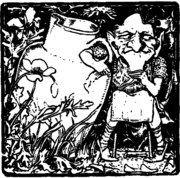
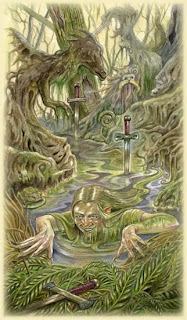
Los duendes que aparecen en ésta historia son probablemente, de acuerdo a su apariencia, cluricauns, habituales de las bodegas y amigos de los borrachos [14]. La tradición de enterrar un cadaver antes de la salida del sol es típica de la tradición celta, ya que en caso contrario el alma del muerto quedaba atrapada vagando sobre la tierra. Juanita Dientesverdes es un monstruo tradicional de los ríos de Yorkshire que se alimenta de carne humana. Existen tradiciones similares en otros lugares, como Marga Powler, del río Tees [2]. Por último, Zapatos de Hierro es claramente un boggart.


Otras historias cortas con un fuerte componente floklórico son 'Baba Yaga' y 'Navidades bajo Tierra' [10]. En la primera se relata el primer encuentro de Hellboy con Baba Yaga, la más famosa bruja rusa que ya había aparecido brevemente en 'Despierta al diablo' [7]. Entre otras peculiaridades, vivía en una casa móvil sobre patas de pollo y volaba en un mortero para contar las cucharas de los hogares rusos. El segundo relato está inspirado en un cuento antiguo sobre una joven que encuentra bajo un arbusto unas escaleras que conducen a un palacio subterráneo, donde se enamora de un príncipe invisible. Según Mignola, el palacio le pareció un símbolo de una tumba y de ahí el componente macabro de la historia, que incluye la clásica tradición vampírica de morder a los individuos que han significado algo para la criatura.


'El ataud encadenado' [10] es otro ejemplo de historia tradicional inglesa adaptada para encajarse en la historia de Hellboy. Como curiosidad, el detalle de los ganchos que atraviesan el cuerpo de la bruja moribunda y que Clive Barker utilizaría en Hellraiser ya se encontraba en la fábula original.


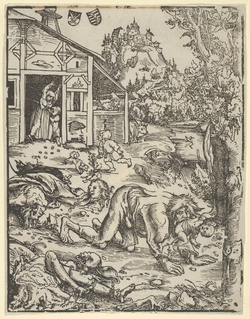
Probablemente, los fantasmas chinos de 'Cabezas' están inspirados en los K'uei [14], aunque en este caso la referencia no es tan clara. 'Los Lobos de St. Augusto' [6] está inspirado en la predicación de San Patricio, patrón de Irlanda y evangelizador de dicha tierra. En su época, aún primaban las religiones celtas y existe una leyenda sobre como el santo maldijo a Verecio, rey de Gales, por reírse de sus palabras de forma que cada 7 años se transformaría en lobos [14]. Por supuesto, el rey Lykos se le adelanto unos siglos y dio origen a la palabra licantropo. 'Casi un Coloso' [8] toma como referencia 'El Coloso de Ylourgne', de Clark Ashton Smith, aunque no puede evitarse observar similitudes con el 'Frankenstein' de Mary Shelley, especialmente en la estática de las películas de James Whale.


Sea cual sea la inspiracion de Mignola, no cabe duda de que seguira asombrandonos y maravillandonos mientras Hellboy y los suyos nos acompañen.

[1] J. Byrne, M. Mignola, "Semilla de Destrucción", #1-4, Dark Horse, 1994
[2] B. Froud, A. Lee, "Hadas", Ed. Montena, S.A., 1983
[3] C. Golden, M. Mignola, "The Lost Army", Dark Horse, 1997
[4] H.P. Lovecraft y otros, "Los Mitos de Cthulhu", Ed. Alianza, 1969
[5] B. Lumley, "Los que Acechan en el Abismo", Ed. Edaf, 1992
[6] M. Mignola, "Los Lobos de San Augusto", Dark Horse Presents #88-91, Dark Horse, 1994
[7] M. Mignola, "Despierta al Diablo", #1-5, Dark Horse, 1996
[8] M. Mignola, "Almost Colossus", #1-2, Dark Horse, 1997
[9] M. Mignola, "La Mano del Destino", DHP Annual, Dark Horse, 1998
[10] M. Mignola, "The Chained Coffin and Others", Dark Horse, 1998
[11] M. Mignola, B. McDonald, D. Thompson, "Abe Sapiens: Drums of the Dead", Dark Horse, 1999
[12]Ref. Kaleidoskope Sp Mignola, 1
[13]Ref. Kaleidoskope Sp Mignola, 2
[14] M. Page, R. Ingpen, "Enciclopedia de las Cosas que Nunca Existieron", Ed.Anaya, 1986
[15] J. Robinson, M. Mignola, "Batman, Hellboy, Starman", DC & Dark Horse, 1999
_______________________________________________________________________
Everyday is Halloween! Mike Mignola and the horror genre

It’s been a while since Mignola, master or light and shadows, and his style started to shine with its own light in the comic scene. Mignola evolved his pencils to an effective, elegant and simple line and his art has been widely commented [12][13]. This essay, hence, focuses in his work as a writer and on the influence of classic horror on his stories.

After working several years for the best known companies in american comicbook scene, Mignola got the chance to create his own character subjected to more flexible conditions under Dark Horse Legend stamp, where famous authors like Frank Miller, Art Adams or John Byrne wew already working. He decided that it was time to do what he liked and, thus, Hellboy was born.

After a few short stories on the common premise “Hellboy stomps [insert your favorite monster here]”, basically published in “Dark Horse Presents”, the first long Hellboy story [1] was written by John Byrne, from an idea by Mignola himself. According to his own words, Mignola played a progressively more important role as a writer on the story than inititally planned and, from then on, took control over his own scripts. “Seed of destruction” introduces the main characters and the bases of its future development.

The most obvious reference in Hellboy with respect to classic terror is the existence of (a) Hell, as portayed in Christian religion, inhabited by demons. As usual in Sabbath [14], our hero is the child of the impious mating of a witch with one of these demons [10]. This makes Hellboy the classic character tainted by his dark side and in continuous struggle with his dark nature. This idea is quite common in current literature but can be tracked all the way back to medieval literature, when Beowulf, son of the devil and a fooled princess, consecrates his life to fight his father’s plans. This type of heroes usually inherit some special gift, but also a bloodlust that they hardly manage to control. Ocassionally, they are definitively evil from the very beginning, like in the Omen. In our case, Hellboy is not as enslaved by this kind of instincts as by his apparently unavoidable destiny as nations slayer [1][7][9], as decided by Rasputin, his summoner.

Leaving Rasputin, a historic character dating from the tsars Russia who reached some power as a holy man just to be betrayed and killed by his friend Yusopov, most influences in the basic story guideline are purely Lovecraft. It is necessary to note, though that Mignola works with an amalgam of the christian hell and Lovecraft’s cosmology. While Abe Sapiens, Hellboy’s mate, looks quite lime an atlantic merman [14], it can not be denied that Rasputin’s minions look like the deep ones, a minor race vaguely antropoid but with clear amphibian features [4]. It is important to note that Lovecraft already described the possibility of transforming these things into frogs, a fact that could explain their role in the first miniseries.

Lovecraft’s cosmogony influences can also be appreciated in Rasputin’s summoning, almost awakening some beings out of time who sleep in outer space. Apparently, their awakening would be related to the end of the world as is. Mignola makes a reference to the Seven, a number that does not match neither the five outer gods nor the twelve primigenians. Quantitetively, the seven would likely be primigenians, as the best known ones are only seven: Cthugha, Cthulhu, Hastur, Ithaqua, Nyogtha, Shudde M'ell and Tsathogghua. However, primigenians did not sleep in space but in tombs spreaded along our world. Besides, in another story [15], there is a clear invocation to Suggor Yogeroth, an ancestral being whose name is clearly an anagram of Yog-Sothoth, one of the external gods.

It is also interesting that Rasputin and his tentacled friend are found in a state that recalls one of the Necronomicon [4] best known cites: “That is not dead which can eternal lie, And with strange aeons even death may die
Rasputin himself and his spells look more like a Cthulhu myths warlock than like your typical storybook wizard, appearing both in Lovecraft’s and, later, Fritz Leiber’s work.

Another reference to horror literature is the BPRD institution, an organization created to deal with paranormal events on behalf of humanity. These organizations were already operating in Lovecraft’s works, e.g. the Wilmarth foundation [5], whose members define themselves as horror hunters at almost planet level. Members of the bureau also include university professors like Kate Corrigan [6][8] or Anastasia Bruntsfield [3], psych guys, like Liz Sherman [1][7][8] or Garret Omatta [11], and unhuman beings like Abe Sapiens [1][7][11] or Hellboy himself.

Mignola alos uses classic horror characters from literature. For example, in the “Wake the devil” miniseries [7], there are two clear examples: Giurescu the vampire and Roger, the golem. Vampires gow all the way back to Ancient Egypt. The dubious honor of being the first vampire could be given to Lilith, Adam’s first wife before he married Eve. Giurescu os, nevetheless, a vampire in the line of magyar wampyr, more typical in romantic literature. Curiously, Giurescu is not turned by another vampire, but brought to his no-life by another classic monster: Hecate. Hecate, the goddess, is, indeed, a mosnter from classic Greece, the lamia. If we dig a little further, Giurescu is brought back to life by throwing him into a cauldron, like Clyddno Eiddyn in the celtic myths.

The golem is a clay figure presumedly created in 1590 by rabbi Low Ben Nezael to protect jews in Prague againts the christians’ attack. Roger is defined in [7-8} like an homunculus, probably because he has been created in al alchemist workshop and not by means of the traditional holy word shem [14]. Nevertheless, homunculi, presumedly created by Paracelso (1940-1541), are supposed to be smaller and far more similar to the creatures that kidnapped Kate in [8].

Another key element in several stories is the classic ghost: a dead person’s soul that appears in intangible state and are usually inoffensive [14]. There are different types of ghosts in Hellboy: the damned souls, who are bound to pay for their actions or for some curse [1][8], and shadows of the past [10].

If we go over marginal refernces to classic cult movies like “Night of the Living Dead” or The mummy” [3], Mignola has more obscure references to folklore. In “The Corpse and Ironshoes” [10]. Mignola uses a short irish tale, ‘Teig O’Kane and the corpse’, adding a bunch of elements borrowed from other local myths- For example, in irish stories the Fair Ones or faeries lose their breeding capacities due to the loss of belief of humans on their race. In order to avoid extinction, sometimes they bred with humans bur, more often, they stole babies from their cribs to raise them as their own. These babies were replaced by changellings, a type of fairy that had the same look than the kio and who, eventually, faked its own death to return to their own. Changellings, like their people, were sensitive to iron. Dwarves in this story were, most likely, according to their appearance, cluricauns, inhabitants of cellars and friends to drunken fellas [14}. The tradition of having corpses bried before sunrise is typical among the celts, as souls would be trapped into eternal wandering between worlds otherwise. Jenny Greenteeth is a traditional monster living in Yorkshire rivers who feed on human flesh. There are similar traditions in other places, like Marga Powler, from Tees river[2}. Finally, ironshoes is clearly a boggart, a household spirit which causes things to disappear, milk to sour, and dogs to go lame.

Other short stories with a strong folklore component include “Baba Yaga” and “Xmas underworld” [10]. In the first onw, Baba Yaga fights Hellboy for the first time. Baba Yaga is the most famous witch in russian folklore and she hsd already appeared briefly in “Wake the Devil” [7]. Among other pecularities, she lived in a hut with chicken legs and flew with a mortar to count spoons in russian houses. The second tale is inspired on a short piece on a young woman who finds a set of stairs into a subterranean world, where she falls in love with an invisible prince. According to Mignola, the palace was as symbol of a grave and, so, the story had a macabre touch, that included the traditional bite to turn the most loved ones into vampires.

“The chained coffin” [10] is another example of traditional english tales tailored into Hellboy. As a curiosity, the hooks biting into the old witch’s body, later used by Clive Barker in Hellraiser, were already written into the original fable. Probably, chinese ghosts in “Heads” are freely inspired in the K’uei [14}. “Wolves of St August” [6] are inspired in St Patrick, the best known irish saint who evangelized the island. There is a legend on his travels when he met welsh king Verence and cursed him for laugthing at his words: he would become a wolf every 7 years [14]- Of course, king Lykos did the same a few centuries before and gave birth to the word “lycantrhopus”. “Almost Colossus” [8] inspires on Clark Aston Smith’s “The colossus of Ylourgne”, even though it is impossible not to observe similarities with Mary Shelley’s Frankenstein as portrayed by James Whale.

Whatever is inspiration, might be, there is no doubt that Mignola will keep amazing and astonishing usas long as Hellboy and his friends walk among us.

Why the Grinch stole Easter ...


Or I wish he had! Damn spanish Easter! It might look interesting the first few times, when you don't have to live it every year but try to walk the city center during this week and you'll see! All these procesiones have to cross the same streets at the same time, effectively cutting them from 6 pm to 1 am. I had to walk the green line in the picture to get home after I got trapped before in the center by several procesiones (see red lines) all competing to get the best walkthrough.


And then, all these people who had not gone to church since baptism crying on the streets, shouting and telling you to be respectful and just stay there until the whole crowd is gone. That's education (and, why not, religion) for you these days :P Today I had a creep short enough to not reach my chin and 45 kg average telling me that I could not move through as rudely as he could. It took me all I had to just not punch him out of my way, something that was looking easier by the moment. Yet, the day is still young ...

Granada Comic Con


Last weekend, Granada held the local comic convention in Armilla. This convention is not very large, but it's been there for a while and this year was particularly interesting regarding guests: Jill Thompson, Juan Jimenez, Brian Bolland, Azzarello, Phil Jimenez and Carlos Ezquerra, among others. They were all extra-cool also, and I walked out of the place with three Wonder Woman sketches and a spooktacular Scary Godmother. I also kept a special place in my heart (or maybe another organ, :D) for Cosplayers, who usually give the show. I'm not particularly fond of manga, so my big prize this year went to the Dungeon & Dragons group, all dressed up with unicorn and everything :D:D- The best contumes, though, were probably Sweeney Todd and breadmaker, old friends, who also posed perfectly for pictures and were probably (like it or not) the most shot people in the place- Many happy returns!


Holmes v1 finished and v2 in the oven ...


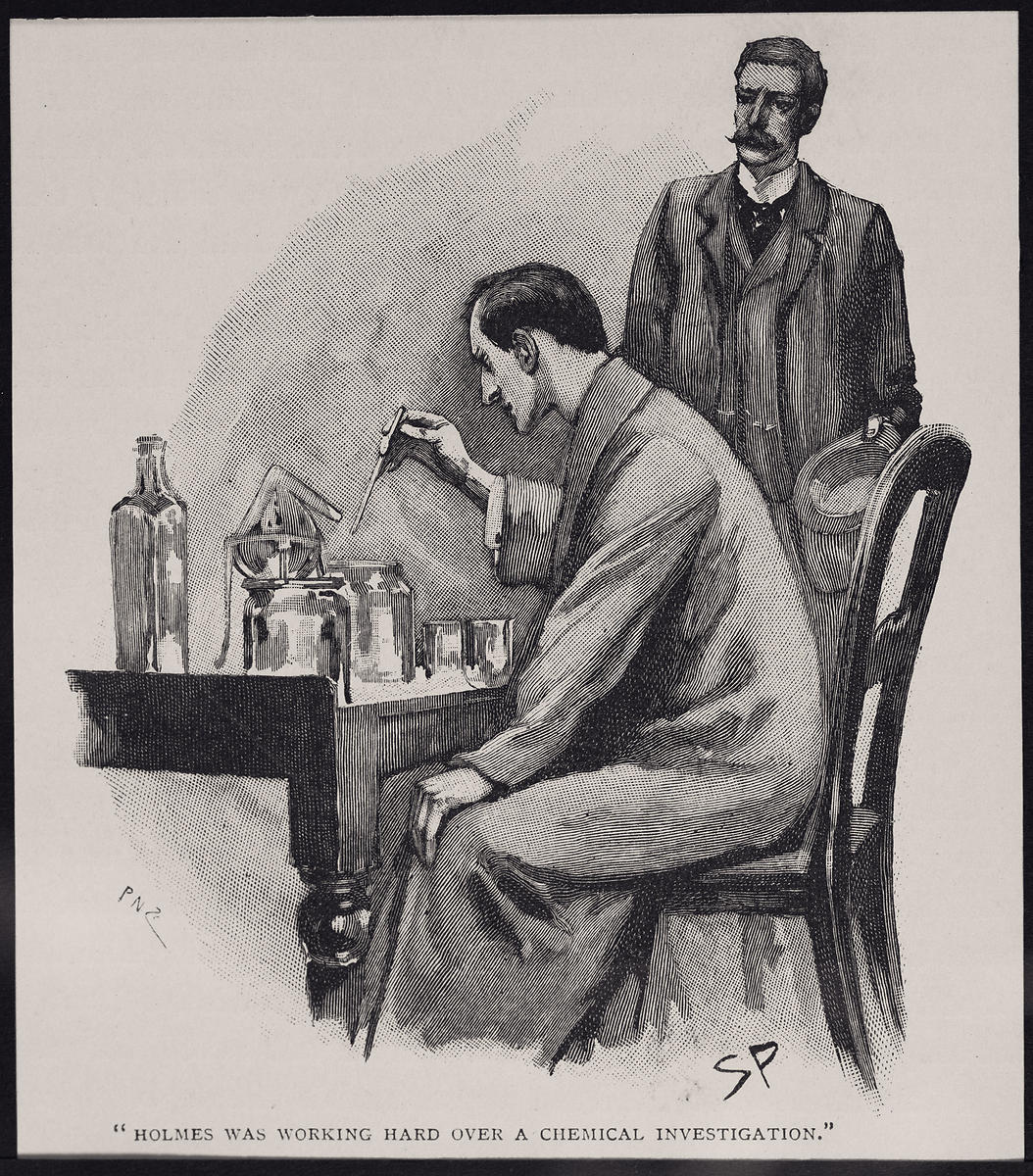
After watching House for a while, one gets the urge to read back old Holmes' novels, if only to find out how faithful our Greg is to the original character (BTW, if anyone out there knows who Cuddy is in the books, I'm dying of curiosity here, dudes) I've finished the first set of novels this last week (A Study in Scarlet, The Sign of the Four, The Hound of the Baskervilles and Memoirs of Sherlock Holmes) and will start on the second soon. It turns out that it's like CSI for me, I just guess who's behind everything in the first fee pages but don't have the nerve to prove it, so I just sit and watch. Not much mental exercise for me, it seems :(
All in all, I just found out that Holmes and House are even more similar than I thought at the beginning (and, yep, I noticed at first glance that they both live in 221B), plus in the novels it's also never lupus :P
What to read now, what to read ...

Ow, the horror ...


Maybe I'm growing exigent with the years, but where are scripts when you need them? The last movies I have seen had none, and, ok, we have just finished that writers' strike, but it was mostly about TV series and those seems okay to me...
Film 1: Jumper. How can something with so much money in it be so bad? And I'm the first to acknowledge that Christensen is kinda cute but, unlike Orlando Bloom, who has just two expressions, he only has one! Jumper makes you wish you had the same power that Christensen, if only to jump out of the cinema and into anything less boring, like thr wedding video of your cousin in Ibiza. Scifi films must be careful to keep the rules they've establish themselves for the sake of credibility, but here they don't even care for that. There is no story apart from, hey, I've got these cool powers and I'll enjoy myself. It would be better if there were no dialogues either. Those last lines with Christensen going "so I am a jumper" (dramatic pause) "and you are one of them" (another, longer, dramatic pause) Pleeeeeeaseee! They also make the same error that independence day, daylight for our flat earth all along (except in Japan, it is always night in Japan, of course). If you want to lose your money and 90 minutes of your life, suit yourself. Otherwise ...


Now, on DVD, we go to spanish movie The Abandoned, which is a good show of how spanish people can do movies as bad and boring as the rest. Unlike good flicks like Darkness, or tolerable ones like El orfanato, this one is boring from the very beginning. The director says he wanted people to spend a bad time for the whole film and he gets it,but not for the reasons he thought. It goes about a woman who goes back to a farm in Russia when her biological parents die and finds out she has a brother and also that the farm is quite haunted (but in a boring way) Lots of Silent Hill (another little jewel, like this one) like-dumps and few light and you get a movie. I don't even recall what the rest was about because I slept through some parts, I'd only say that they both die and save you from suffering through this flick all along.


Finally, 30 days of night was sort of nice, even if only because the comicbook was a bluff in my opinion. Vampires look just like in the comicbook also and the town gets a pretty scary look. Just in case someone wants to know, the story goes about the village most in the north of the US (Barrow, Alaska), where the sun sets for 30 whole days in winter. At some point, vampires realize that and prepare a banquet-party over there, First they isolate the village and then they attack. I think it is nice in the film that they remove the email vampire organization part and put instead the initial vampire attack which was not in the book (probably because it would have been either too tiresome to draw or maybe it was and I could not find it among all those undefined paint splashes). Time passing gets a bit unrealistic and vampires are not very savvy, but, all in all, the flick was okay.

I like to movies-movies ...

Okidoki, so here are the latest news on the movies I've seen these last weeks. Minor spoilers ahead!

First of all, we go to Alex de la Iglesia's Oxford Murders. Good filming and all, but not too interesting plot, some Deux ex Machina (Leonor Watling practically find the solution herself and does not even have to sing :P) and a slow starting. I think I was expecting something more after "La comunidad", specially with all the advertising this movie had. It's entertaining, though, if you try not to think about maths as Da Vinci Code is entertaining if you know nothing about heresy, Leonardo's painting and criptography. Anyway, I'm kind of partial to action flicks or Sherlock-like mysteries so pay no attention to my opinion on this ...


Cloverfield! This one, I really liked! Same structure as REC, but far more entertaining. It looked like old survival films with Heston and friends and FXs were amazing! Plus the monster is really scary, as they show only minor parts of it most of the time. Slow start, but perfect tempus and well tied end. What are you doing reading this? Go watch the film!


Oh, and I also read, even though I don't usually post about it. This is the last book I've finished (I'm now back to Sherlock Holmes, House made me nostalgic): Terry Pratchett's Wintersmith. It is about how Winter falls in love with young witch Tiffany Achings. Even though we've got the major ingredient for the book to be in my list (Granny Weatherwax), all in all, it didn't make it. I find books about Tiffany a bit too serious and introspective, quite different from the busy, messy pacing of the rest of the Discworld Universe. Anyway, any Pratchett is better than most authors for me, so as long as he writes, I read. BTW, the new book of exerts from Discworld is really a nice edition ...


So this is all for now. See ya soon, guys!

Shameless advertising here!


This last friday my cousin has presented his new work in Granada, around 70 paintings of places all around the province. If you happen to be around the place, it is really worth a visit.

At last! A movie I liked this year!

I'm talking here about Hard Candy, a movie that mostly takes place inside a house, has almost no FX and there are just 3-4 players around, mostly 2 all the time. I'm not commenting anything on this movie, because it is better if you don't know a priori what it is all about. Just as a hint, it starts with child molesters. The best part of the movie is, in my humble opinion, the amazing work of the main actress, young Ellen Page. It is already on DVD and I did not even notice when it was on screen, but, if you've got stomach, I'd surely recommend it.


Another nice watching this weekend -I'd not say surprise because everyone had recommended it- was IT Crowd, about the guys (and girl) in the computer department of a big company. It is cliché gone nuts, and every episode was funnier than the previous one. I thought I could not laugh anymore after Richmond's introduction, how nuts can the script people be :D:D:D Looking forwards to next season.


I'll go into Rome season 2 next, now that my Scrubs DVDs are almost over ..

Que cutre es el cineeeee

Pues ya de retorno de las navidades, los turrones, los empachos y las gastroenteritis y pasando mas por el medico que un coche viejo por la ITV (que pena haber caducado, con lo que yo he sido ...), aprovecho para dejar la cronica cinematografica de estos dias. Poco he visto y menos que tendria que haber visto, porque vaya falta de guiones de que peca Hollywood, y vale que estan de huelga de bolis caidos, pero es que hay cosas que claman al cielo. Mis dos ultimas grandes adquisiones visuales, "Soy Leyenda" y "Alien vs predator 2". Despues de esto, mas de uno pensara que me merezco lo que me he tragado y, si no, a ver pelis de directores checo-albaneses con apellidos impronunciables, pero es que antes la accion tambien tenia su aquel. O quien no recuerda el Alien 1 o el primer Terminator.


Al Will Smith voy a terminar por tomarle odio mortal, y eso que el pobre hace lo que puede. Ya solo lo perdono porque en todas sus pelis enseña abdominales. El final de Soy Leyenda es para darle de palos a los guionistas y mas al Will por tonto del c**lo. Ver para creer. Por cierto, espero que no le hayan pagado mucho a los de los efectos por ordenador en la peli. Unos recortables de mutantes movidos como marionetas y los leones de los click de Famobil hubieran cantado menos. La peli mas aburrida no puede ser, salvo el repullo ocasional tipo tia con pelo en la cara de las pelis japonesas, acompañado del cha-chan de la BSO, por si te has dormido en medio. En fin, cualquier parecido con el libro de Matheson es pura coincidencia.


Y ahora el segundo peliculon. Si bien Paul Anderson es uno de mis directores de cabecera, he decidido evitar todo lo que produzca y no dirija. Tenia que haberlo hecho despues de Resident Evil 2, pero una no escarmienta y le di un voto de confianza por Soldier. Pues no. AVP1 era mas bien simplona, pero tenia su encanto, con unos personajes majetes que van cayendo uno por uno, y ese entorno antartico-gigeriano y su historietilla de trasfondo. AVP2 no tiene ninguna de esas cosas. De hecho, no tiene nada de nada quitando a Michelle la de 24 que podia haberlo arreglado todo desde un principio llamando a Jack Bauer. No he visto semejante vacio de guion desde el Proyecto de la Bruja de Blair y eso que en medio me he tragado cosas como Historia de Ricky o La Cosa X del Espacio Exterior. La peli se basa en producir una especie de Alien con rastas que viene del Predator pardillo infectado en la peli anterior y que, como todos los aliens que se salvan de chiripa en todos los filmes, tiene capacidad de reproducirse. Con tanta reina, el planeta alien debe ser como la jaula de las locas esa. El rollo es que se cae a la tierra al lado de un pueblo y lo masacra, con la ayuda de un Predator estilo Sr Lobo de Pulp Fiction que viene a arreglar el entuerto. Al mismo tiempo te presentan un puñado de personajes que te dan exactamente igual y que van matando sin pena ni gloria hasta que al final se salvan los que ya sabiamos que se iban a salvar. Lo mejor, los tres segundos del final, dedicados a los frikis hard-core. El resto, no pagueis por verlo, amiguitos.

REC, o corta, niño, que vienen los zombies


A ver, a ver ... Que he visto ultimamente ... Asi, a bote pronto, me acuerdo de Beowulf, molona, si se ve en 3D IMAX, Stardust, que no esta mal como cuento de hadas, First Snow, que me aburrio soberanamente, y, el jueves pasado, lo ultimo de Balaguero y Paco Plaza, REC. REC es como la version española (y bastante mejor, afortunadamente) del proyecto de la bruja esa de Blair, donde 3 americanos se van al bosque sin una mala muda de calcetines pero con la XBox para enchufarla en un arbol o algo, y alli que se pierden entre cuatro matojos. En este caso, hay un par de reporteros de cadena local esperando a que pase algo en un parque de bomberos para ganarse el sustento cuando reciben un aviso de un bloque de vecinos como el de Aqui no hay quien viva pero en Barcelona. Una vez que entran, sanidad, actuando rauda como nunca se ha visto, les chapa el bloque por amenaza de zombies descontrolados, pero, como buen cuerpo de administracion, no les dice na de na ... y alli que se encuentran ellos, en amor y compaña con los zombies y los vecinos, que no se sabe que es peor, camara al hombro y a grabar como unos profesionales.

Sera porque despues de Darkness esperaba mas del Balaguero, pero la peli no me mato. Se dejaba ver y tal, pero era algo lenta al principio y bastante repetitiva y la mayoria de los sobresaltos son estilo china pelua y blancuzca de esas que salen en el terror asiatico. En fin, algo que ver mejor en casa delante del DVD y con las luces apagadas, imagino. Aunque solos en la sala como estabamos tambien tenia su puntito, claro ...

Viva Las Vegas


Here I was, with nothing else to do besides the usual ton of reports, scripts and lessons so I thought to myself, There! I've got a weekend left this month, why not fly to Las Vegas? Sounded good, I had never been there and it still had not gone to the point of Resident Evil Extinction. And, also, it happened to be in the way to my next forced destination.


The stop and New York implied, as usual, to wait for a delayed plane. Nevertheless, we got to Las Vegas on time to see all the lights on. Boy, it looked like a theme park! We had managed to get a hotel close to The Strip, the Palace Station. It was okay, bur close is not enough in the US! Crossing the street is an issue even if you are not a chicken. The next morning it took us almost one hour to reach the Wynn and a little less, but a lot more of adventures to get back (including fence jumping and what not) , so we stuck to the hourly hotel shuttle service afterwards. After extensive walking, we did not see half the casinos, but I already decided that I preferred the ones with indoor skies, like Venetia, Paris or Planet Hollywood. Food was not particularly cheap -as reported by some friends- but portions were HUGE, so I would have gained a few pounds had I not walked so much those days.


I booked sunday for a trip to Grand Canyon, but it was somewhat dissappointing except for the Joshua Trees (go, U2!). I did not get the chance to walk too much, everything was so controlled that it looked less real than Las Vegas itself. Even the helicopter drive and the skywalk looked like some cheap attraction, but maybe I was expecting too much of the experience. All in all, I stick to the crevases in Iceland. And food was particularly ghastly. Along with casino hopping (I do not play, I'm too obsessive to put myself into temptations), I decided to go to as many attractions and shows as possible, and believe me, in Las Vegas deciding where to go is not as easy as it seems. There are these boots where you can buy tickets at half price if you wait for the queue and have no specific show in mind, so we went to Le Cirque du Soleil (Zumanity), the knight show at Camelot, the roller coaster at New York, New York, the pirates at Treasure Island, the acrobatics at Planet Hollywood and I'm sure I'm missing something, but it is okay. And, on top of it all, we found all clichés are true, from the dancing fountains at Bellaggio to guys in Elvis suits and people in front of coin machines that no longer carry cups of cents but credit cards in a chain. And big limos full of shouting blondes! I even bought a rock guitar handbag for my sis! Wouldn't mind going back sometime :)

Exercise is ... healthy?

So they told me, so they did. So many years on the run and I get to go back home in blue. And, believe me, I do not bruise easily :P

This are three pictures of my most recent sport acquisitions (not acquired at the same time, thankfully). Don't worry about it, though, they do not hurt ... much


Ipod list on october

Fighter (Christina Aguilera)
The kill (30 seconds to Mars)
Tourniquet (Evanescence)
Prayer of the refugee (Rise Against)
Koppelia no hitsugi (Noir)
I suggest (Marlango)
Dance me to the end of love (Madeleine Peyroux)
You're speaking my lenguage (Juliette and the licks)

Watching inconsequential things ...

Yep. I don't like profound, intellectual flicks, I'm not that deep myself. Hence, I've decided to watch anime for a while and see where it goes ...

This week, I'm partial to:

Noir


Basically, this is about a renowned assassin, Mireille Bouquet, who is contacted by a mysterious girl who claims to have forgotten about her past. All she knows is that she is named "Noir" and that she has amazing skills to kill and no trace of emotion when doing it. The girl asks Mireille's help to find out who she is, as their pasts seem to be linked somehow. Mireille agrees, but she warns the girl that, after everything is settled, she will have to kill her (quite unlikely, as soon the mysterious girl becomes her only friend). Both women start to work together as Noir, only to find out that an ancient organization known as the Soldats are behind their trace and that another lethal woman who claims to be the real Noir is toying with them. This is as far as episode 13 goes without spoiling too much of the fun. Action scenes are neat and the argument is not too complex. Characters are quite nice and animation is elegant. The best, though, is the amazing soundtrack and, specially, the main theme "Kopperia no Hitsugi".


X Clamp

This one is swords and fantasy. I'm just starting with the battles, but as far as I've watched, it goes like this. The Apocalypsis is coming. The main character, Kamui, seems to have a power beyond anything known on Earth. He is supposed to choose between being a sky dragon and saving Earth or an Earth dragon, a day X in 1999. If he decides the first, he'll join the seven seals. Otherwise, he'd join the seven angels. While the first ones believe that Earth is worth saving, the angels would rather have it destroyed so that something new, and possibly better, could start. Kamui has suffered a lot and lost everything, so he is unsure about which path to take, specially as both parts try to attract him to their sides. The only thing he is attached to are his best and only friends, Kotori and Fumaa. However, as soon as he chooses one side, his antagonist will be born, with equal force and a different alignment. And whatever he chooses, he will lost what he values more. This anime is quite fun and all characters are pretty interesting and original. It takes a while to start with the action, but moves pretty fast afterwards.

Maybe I'll go back to Bleach some time soon ...

Figure out where I was last august ...


Far away from home and ignoring what was ahead ...

A bit slow on the taking ...


... but today's conclusion, boys and girls, is that only two creatures may offer pure, unconditional love: dogs and kids. Just choose your pick; any other is basically selfish, non-constant and highly conditional.
Powered by Blogger